
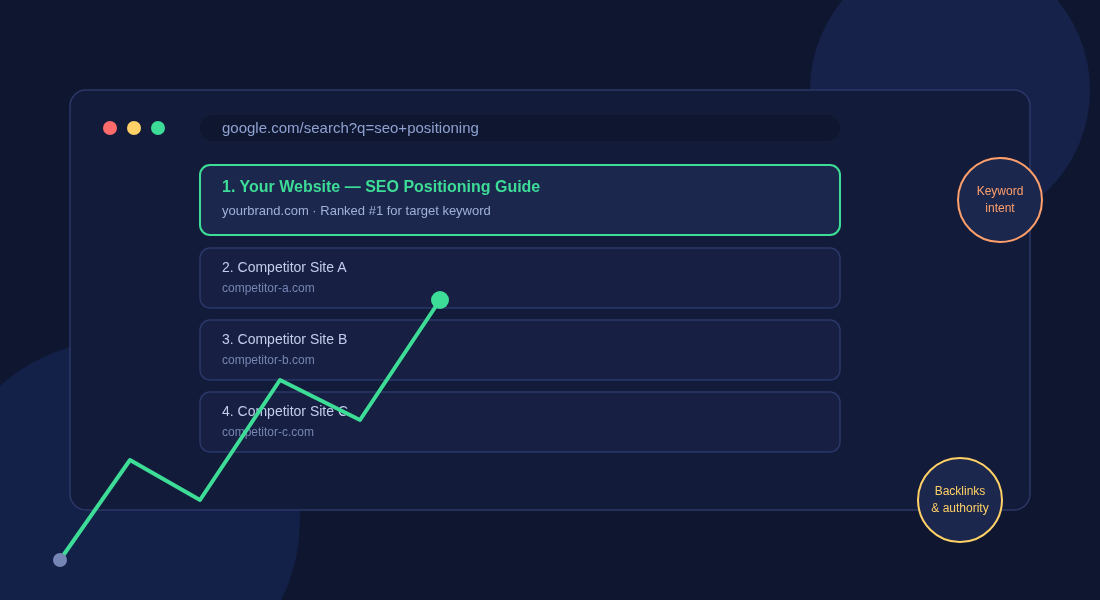
SEO positioning is the place your website holds in Google’s search results for a specific keyword. It sounds simple. However, it’s one of the most misunderstood parts of digital marketing. Many business owners assume that showing up somewhere in Google is enough. In reality, your exact position decides whether people click on your site or scroll straight past it. This guide explains what SEO positioning really means, why it matters, and how you can improve yours step by step.
What Is SEO Positioning?
SEO positioning refers to your ranking for a chosen keyword or phrase. General SEO is the whole strategy behind getting found online. Positioning, on the other hand, is the actual result: are you in spot one, five, or twenty?
Think of it like a race. SEO is your training plan. Positioning is where you finish. You can train hard, but a smarter competitor might still beat you to the top. That’s why strong SEO positioning takes ongoing effort, not a one-time fix.
Positioning also shifts constantly. Google updates its algorithm often. Competitors publish new content. User behaviour changes over time. So a page sitting at position two today could drop to position eight next month. Therefore, positioning must be treated as an ongoing process, not a task you complete once.
Why Does SEO Positioning Matter?
Most clicks go to the first few results on page one. Anything below that is almost invisible to searchers. So if your SEO positioning is weak for a valuable keyword, you’re likely losing customers to competitors, even if your product is better.
Good positioning also builds trust. People tend to associate top rankings with credibility. As a result, a business that ranks well is often seen as more established, even before a visitor opens the page.
Finally, positioning creates a snowball effect. Higher rankings lead to more clicks. More clicks create stronger engagement signals. Those signals then help reinforce your position further. In short, once you get positioning right, it becomes easier to maintain.
What Affects Your SEO Positioning?
Several factors work together to shape your SEO positioning. None of them work well in isolation.
Keyword intent comes first. Google tries to match every search with the most useful result. If someone searches “affordable running shoes for beginners” and your page covers shoe history instead, no amount of optimisation will save your ranking. So start by understanding what your audience actually wants.
On-page elements matter next. These include your title tags, meta descriptions, headings, and how naturally your keyword appears in the content. These signals help search engines understand your page topic.
Technical health plays a quieter role, but it still counts. A slow site, broken links, or poor mobile design can hold back even great content. Search engines favour pages that load fast and work well on any device.
Backlinks and authority remain one of the strongest ranking signals. When trusted sites link to your content, it acts like a vote of confidence. This is why many businesses invest in professional content and outreach. For instance, the content writing services at Ads Place help brands create content that naturally earns links and builds authority over time.
Content quality also matters more than ever. Thin or generic pages rarely hold strong positions for long, especially against competitors offering deeper, more useful content.
User engagement rounds things out. If visitors stay on your page and explore further, search engines take that as a positive signal.
How to Improve Your SEO Positioning
Improving your SEO positioning takes a clear plan. It won’t happen overnight, but small, consistent steps add up.
First, choose keywords that genuinely matter to your business. Avoid chasing high-volume terms that don’t match your offer. Instead, focus on search intent and relevance.
Next, review your existing pages. Compare them with competitors who already rank well. Look for content gaps, missing detail, or outdated information you can improve.
After that, strengthen your content itself. Expand thin pages. Answer the searcher’s question clearly and quickly. Content that genuinely helps people tends to earn better positioning naturally.
Technical fixes should happen alongside this. Check your site speed. Confirm your pages work well on mobile. Fix broken links and duplicate content. These tasks aren’t glamorous, but they remove hidden barriers to ranking.
Building backlinks takes longer, yet it often delivers the biggest gains. Rather than chasing volume, aim for links from relevant, respected sites. A single link from a trusted source can outweigh dozens of low-quality ones.
Finally, track your progress regularly. Positioning shifts constantly, so monitor your rankings and adjust your approach as needed. For a deeper, foundational look at how search engines crawl and rank content, Moz’s Beginner’s Guide to SEO is a widely respected resource worth exploring.
Common SEO Positioning Mistakes to Avoid
Many businesses unintentionally damage their own SEO positioning. One common mistake is targeting keywords that are too competitive for a newer site. This often leads to months of effort with little visible progress. Instead, start with more specific, lower-competition terms, then build toward broader ones over time.
Another mistake is ignoring older content. Pages that once ranked well can quietly decline if left untouched. Updating existing articles is often more efficient than starting from scratch every time.
Neglecting mobile users is also costly. Most searches now happen on mobile devices. So a site that isn’t mobile-friendly risks losing both rankings and visitors, no matter how strong the content is.
Final Thoughts on SEO Positioning
Strong SEO positioning isn’t about shortcuts. It comes from consistent effort across content, technical health, and authority building. Businesses that treat positioning as an ongoing practice, rather than a one-off project, tend to see steadier, longer-lasting results.
Start by understanding your audience’s intent. Build content that genuinely serves them. Support it with solid technical foundations. Then earn authority through quality links and relationships. Do this consistently, and better SEO positioning becomes a natural result, not a mystery.

