
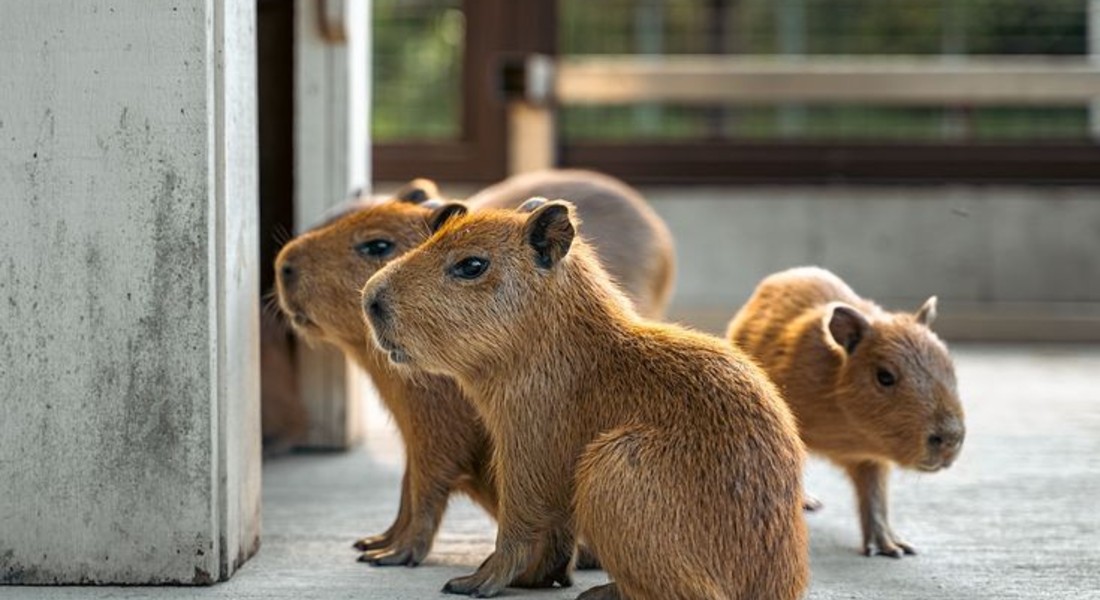
In the vast, verdant mosaic of South American wetlands, one creature has transcended its biological niche to become a global symbol of tranquility and social harmony. The Capybara (Hydrochoerus hydrochaeris), the world’s largest living rodent, is a study in evolutionary specialization and behavioral curiosity. While the internet has canonized this animal as a “zen master” that befriends every species it encounters, the reality of its existence is even more fascinating than the memes suggest. By delving into the ecology, intricate social behaviors, and the cultural mythos of this semi-aquatic marvel, we can appreciate why this species is a cornerstone of its environment.
1. The Evolutionary Blueprint: Built for the Water
To look at a Capybara is to see a creature perfectly calibrated for a life between land and liquid. Belonging to the family Caviidae—the same family as the humble guinea pig—the “water hog” (as its name translates in various indigenous languages) has undergone millions of years of refinement to thrive in the flooded savannas and riverbanks of South America.
Semi-Aquatic Specializations
The physiology of the Capybara is a masterclass in adaptation. Their eyes, ears, and nostrils are positioned near the top of their heads, much like a hippopotamus or a crocodile. This allows them to remain almost entirely submerged, staying cool and hidden from predators, while still maintaining full sensory awareness of their surroundings. Their feet are slightly webbed, providing efficient propulsion through the water, while their thick, coarse fur dries quickly upon exiting the river, preventing fungal growth in the humid tropical heat.
The Ever-Growing Tooth
As a rodent, the Capybara possesses the signature trait of the order: hypsodont teeth. These incisors never stop growing. Their diet consists primarily of aquatic plants, grasses, and bark, which are high in silica and incredibly abrasive. Without the constant growth of their teeth, the mechanical wear of their diet would render them unable to eat within a few years. This biological “conveyor belt” of dental renewal is a key factor in their longevity in the wild.
2. Wetland Ecology: The Ecosystem Architect
The Capybara does not merely inhabit the wetlands; it shapes them. Found throughout every South American country except Chile, they are a “keystone species” whose presence dictates the health and diversity of their habitat.
Grazing Dynamics
As mega-herbivores of the rodent world, their grazing habits manage the overgrowth of wetland flora. By keeping grass heights low, they create “grazing lawns” that allow smaller bird species to forage for insects. Their selective feeding also influences the plant composition of the riverbanks, preventing certain invasive species from choking out the native biodiversity.
The Food Web Anchor
From an ecological standpoint, the Capybara is a vital energy link. They convert tough, fibrous vegetation into high-protein biomass, which in turn sustains South America’s apex predators. Jaguars, caimans, and anacondas rely heavily on this rodent for survival. Furthermore, their waste provides a massive influx of nutrients into the water system, fueling the growth of phytoplankton and supporting fish populations.
3. Social Intelligence: The Geometry of the Herd
Perhaps the most compelling aspect of the Capybara is its social structure. They are rarely found alone; instead, they live in complex groups ranging from ten to thirty individuals, though these numbers can swell to over a hundred during the dry season when water sources shrink.
Hierarchical Harmony
The social life of a Capybara is governed by a strict but usually non-violent hierarchy. A dominant male leads the group, maintaining his status through scent marking—using a specialized gland on his snout called a morrillo—and vocalizations. However, unlike many other mammals where the “alpha” exerts total control, the herd operates with a high degree of communal cooperation.
Alloparenting: It Takes a Village
In the world of the Capybara, childcare is a collective effort. Females in a group often give birth around the same time and will nurse each other’s young. This “alloparenting” increases the survival rate of the pups, as there is always an adult on “sentry duty” to whistle a warning if a harpy eagle or a caiman approaches. This communal nursery system is one of the most advanced social behaviors seen in the rodent world.
4. The “Gentle Giant” Mythos: Separating Fact from Fiction
In recent years, the Capybara has achieved a level of digital fame that few wild animals ever reach. Photos of them sitting calmly next to crocodiles or allowing birds to perch on their heads have birthed the myth of the “universal friend.” But what is the science behind this perceived “chill”?
Interspecies Interaction
The reality of these interactions is often a matter of mutualism or indifference. Birds, such as the caracara or the cattle tyrant, perch on the Capybara to eat ticks and flies off their skin—a “cleaning station” service that the rodent finds pleasant. As for their coexistence with predators like caimans, it is often a matter of energy conservation; a well-fed caiman is unlikely to attack an adult rodent that can weigh up to 150 pounds, leading to a tense but peaceful proximity.
The Zen Disposition
While they are not actively “trying” to be friends with everyone, the Capybara does possess a low-reactivity temperament. Because they spend so much time in groups, they have evolved a high tolerance for the presence of others. This “low-arousal” state is an evolutionary advantage; jumping at every shadow would waste precious energy in the heat of the Pantanal.
5. Modern Challenges: Conservation in a Changing Climate
Despite their current abundance, the Capybara faces modern threats that require our attention. As agriculture expands in the Amazon and the Cerrado, their natural habitats are being fragmented.
Human-Wildlife Conflict
In suburban areas of Brazil and Argentina, capybaras have become “urban refugees.” They are frequently seen on golf courses or in parks, leading to conflicts over land use and concerns about tick-borne illnesses. Managing these populations requires a modern approach to urban ecology that emphasizes coexistence rather than eradication.
Climate and Water Security
As semi-aquatic animals, they are highly vulnerable to the intensifying droughts caused by climate change. When wetlands dry up, the Capybara loses its primary defense mechanism (the water) and its food source. Protecting the hydrological integrity of South American wetlands is not just about the water—it is about the survival of the species that anchor that environment.
6. The Science of Coprophagy: A Necessary Taboo
No “101” guide would be complete without addressing one of the species’ most unusual traits: coprophagy. To maximize the nutrition they get from their fibrous diet, the Capybara eats its own morning droppings. These “soft” pellets are rich in beneficial bacteria and undigested proteins that were broken down in the cecum (a part of their digestive tract) during the first pass. While off-putting to humans, this is a sophisticated biological recycling process that allows them to survive on grasses that would be nutritionally insufficient for other mammals.
7. Conclusion: The Lessons of the Capybara
The Capybara serves as a powerful reminder of the complexity of the natural world. They are not just “large guinea pigs” or “living memes”; they are highly adapted, socially intelligent, and ecologically essential beings. They teach us the value of community, the efficiency of nature’s designs, and the importance of maintaining the delicate balance of our planet’s water systems.
By moving beyond the “Gentle Giant” mythos and understanding the actual science and ecology of the Capybara, we gain a deeper respect for the wild. In a world that often feels chaotic, the steady, communal, and serene existence of this wetland sovereign offers a blueprint for resilience. Whether they are navigating the murky depths of a river or the complexities of a social hierarchy, they do so with a quiet dignity that continues to captivate the human imagination.
Understanding the Capybara: Fast Facts
- Scientific Name: Hydrochoerus hydrochaeris (Water Pig).
- Weight: Can reach up to 66 kg (145 lbs) or more.
- Social Status: Highly social; lives in groups of 10–100.
- Conservation Status: “Least Concern,” though habitat loss remains a threat in specific regions.
- Communication: They use a complex language of barks, whistles, huffs, and purrs to communicate within the herd.

